PrologueA greeting that's really a question
In Chiang Mai, people don't really ask how you are. They ask, “Gin khao laew ga?” — กิ๋นข้าวแล้วกา — have you eaten yet?
It isn't small talk. It's how people up North care for each other. If the answer is no, a bowl appears. Then a basket of sticky rice, a dip of something smoky and green, a plate of crackling. Before long you're sitting on the floor around a low round tray with people you met ten minutes ago, eating with your hands.
That question is where At Chiang Mai began.
Chapter oneSmoke before sunrise
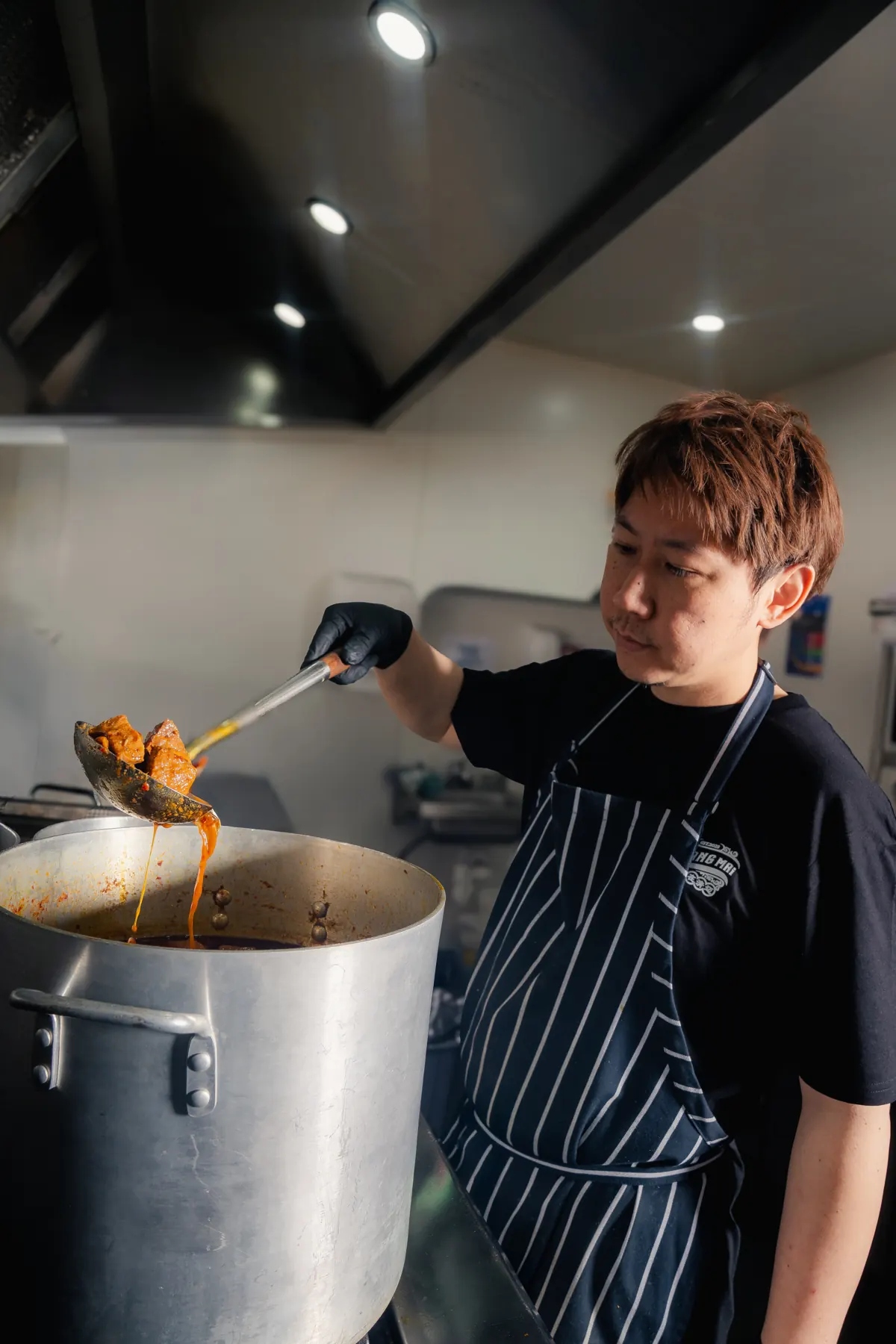
Our chef grew up in Chiang Mai, in the valley ringed by mountains that was once the capital of the Lanna kingdom. Mornings started before the sun did — with the sound of a pestle in a clay mortar and the smell of charcoal catching.
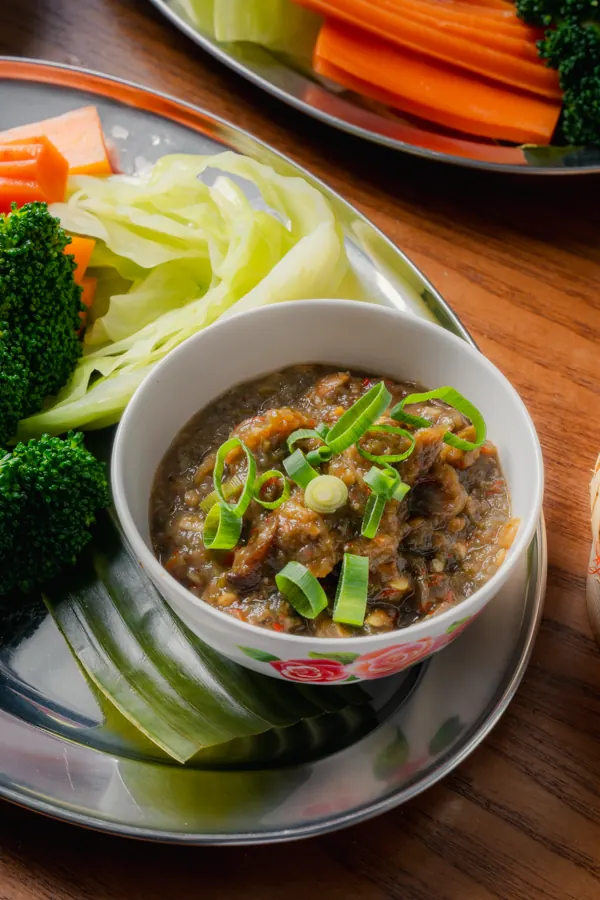
Green chillies, shallots and garlic went straight onto the coals until their skins blistered black. They were peeled warm, pounded by hand and seasoned by taste, never by measurement. That was nam prik noom, and in the chef's family, it was breakfast, lunch and dinner.
“You don't learn Northern food from a recipe. You learn it standing next to someone, watching how long they leave the chillies on the fire.”
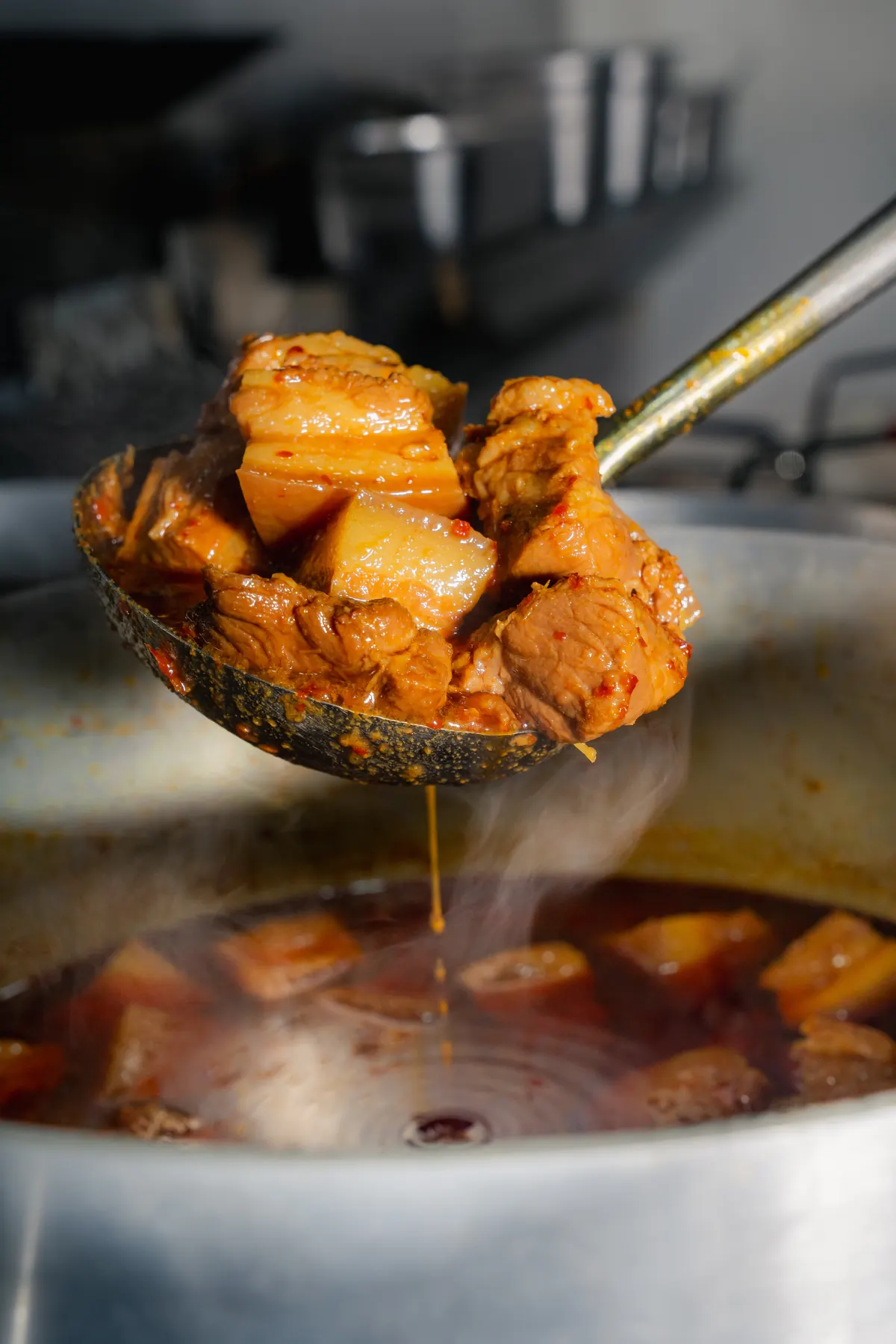
Weekends meant the market: coils of sai aua sausage glossy with lemongrass and kaffir lime, sheets of khaep moo crackling still popping from the fryer, and a pot of haeng lay — the dark, spiced pork belly curry that Chiang Mai families cook for festivals and slow Sundays.
None of it was fancy. All of it was unforgettable.
Chapter twoThe taste that was missing
Life eventually led the chef to Melbourne — a city that loves food as much as Chiang Mai does. And Melbourne loves Thai food. There was a Thai restaurant on nearly every corner of the CBD.
But walking those streets, something didn't add up. The menus were full of green curry, pad thai and coconut soups — beautiful dishes, but dishes from Bangkok and the Centre. The food of the North was almost nowhere. No smoky chilli dips. No haeng lay. No sticky rice in a woven basket, eaten with your fingers.
So the chef started cooking it, first for themselves, then for Thai friends who missed home too, then for Melbourne friends who'd never tasted anything like it. The reaction was always the same: Why can't I get this anywhere?
That question deserved an answer.
Chapter threeWhy we're called “At” Chiang Mai
The name is a promise. Not “Chiang Mai-style”. Not “inspired by”. At Chiang Mai — ณ เชียงใหม่, 在清迈 — meaning that when you sit down at our tables on Little Bourke Street, you should feel like you're actually there.
We opened in the heart of Melbourne's CBD, in the Chinatown end of Little Bourke Street, so that anyone — office workers, students, Thai expats, families on a night out — could step off the street and into Northern Thailand for an evening. Look closely at our logo and you'll find a Chiang Mai-style paper umbrella, the kind made by hand in the villages outside the city.
Chapter fourWhat we won't change
Being far from home means making choices. Some ingredients are hard to find in Australia; some flavours are bold for first-timers. We have one rule: the Northern dishes taste the way they taste in Chiang Mai.
- Nam Prik Noom — chillies, shallots and garlic charred until smoky, then pounded. Never blended into a paste.
- Haeng Lay Pork — pork belly slow-cooked with warm spices until it's rich, sweet and tangy, the Chiang Mai way.
- Khaep Moo — homemade pork crackling, fried until it shatters.
- Sai Aua — Northern Thai sausage full of herbs and spice, grilled to order.
- Sticky rice — because in the North, every meal is built around it.
If you'd like it milder, just ask. But we'll always cook it the real way first.
Chapter fiveThe Khantoke table
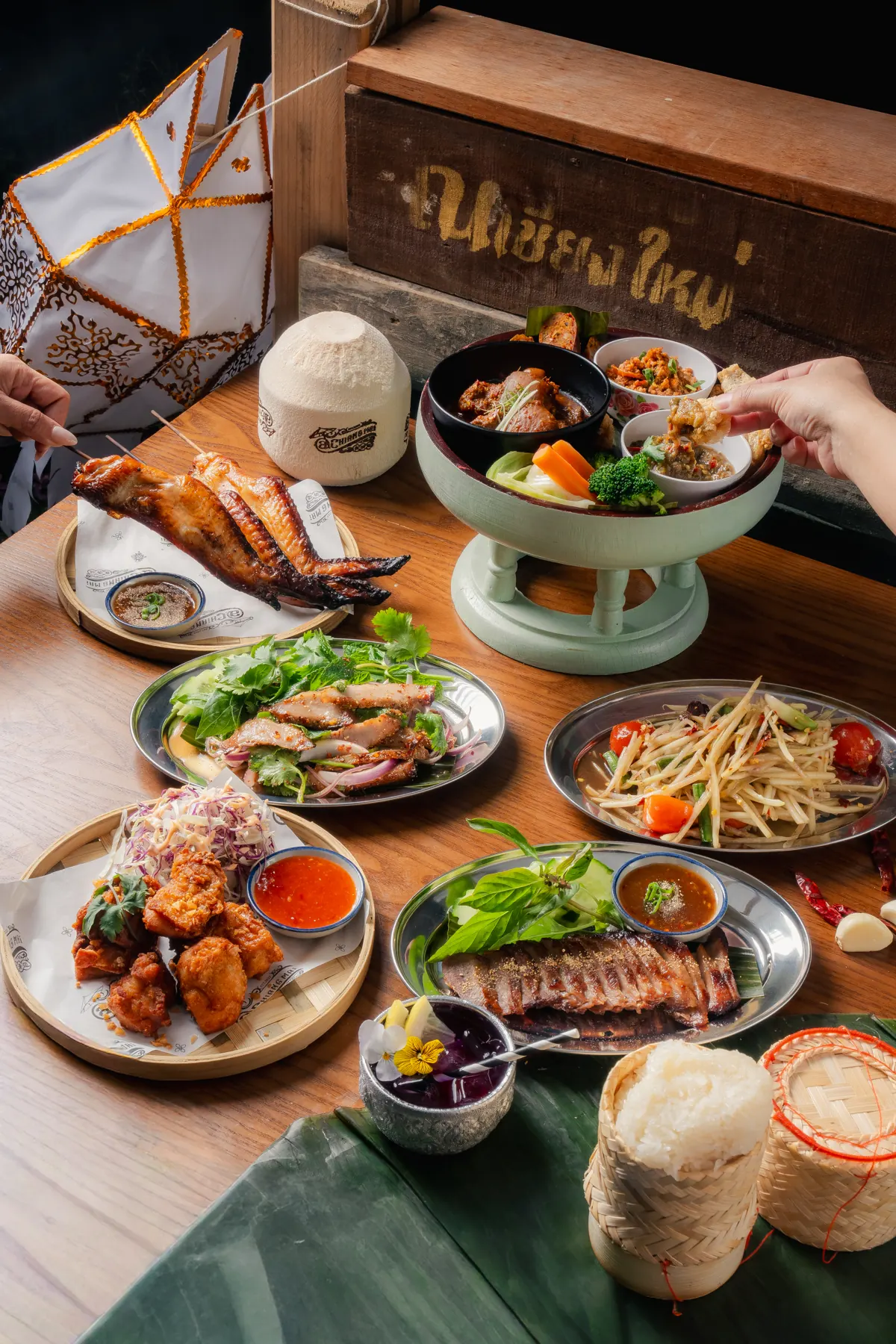
In Lanna tradition, a khantoke (ขันโตก) is a low, round tray — once made of teak or rattan — set with many small bowls. Families and guests sit around it and share. Nobody gets their “own” plate; everybody gets a bit of everything.
That's what we hope At Chiang Mai feels like. Our Khantoke Platter is the best place to start: a generous spread of Northern Thai favourites in the middle of the table, made for passing around, arguing over the last piece and ordering more sticky rice.
And when you walk in, don't be surprised if someone asks: gin khao laew ga?
We hope your answer is “not yet”.
Come and eat with us
132–138 Little Bourke St, Melbourne · Open 7 days · Lunch Fri–Sun